

Masterful Moves
The WEC's top-class Golden Era is evolving into a round-by-round battle of strategies.

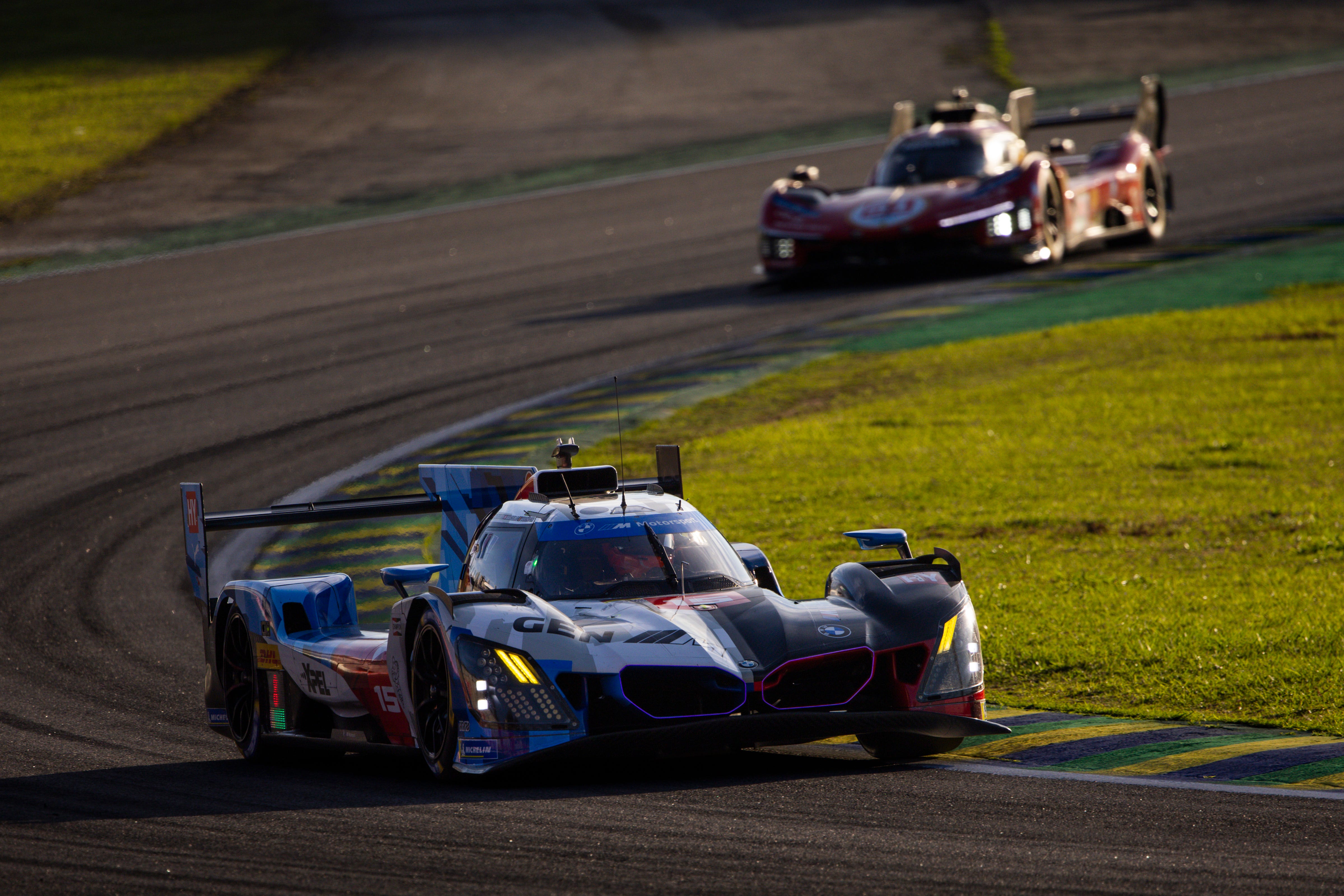
Winning an endurance race from the second-row is hardly unusual. But the No. 15 BMW Team WRT’s Round 4 victory at São Paulo from fourth on the grid is a first. The two Interlagos winners since the track’s 2024 return to the WEC schedule came from the front row.
It’s the latest sign--albeit a small one--that competition in the WEC’s top class is growing closer by the round. Outright pace and reliability are still keys to winning, of course. But they are becoming less of a differentiator than strategy, mistake-free racing, and luck.
Toyota Racing’s place atop the manufacturers’ standings after Round 4 can be directly linked to savvy strategic calls during the team’s two wins.
At the season-opener in Imola, the call to not change tires on its first two stops gained the No. 8 TR010, which started second, five seconds on the pole-winning No. 51 Ferrari. That was enough to put the No. 8 up front.
Later in the race, Toyota opted to not change tires on the No. 7, allowing it to rejoin in second, just ahead of the No. 51, and help seal the leading sister car’s win.
‘Better execution’
“I don’t believe we were the fastest but we had better execution than others that enabled us to win,” said Toyota Racing Technical Director David Floury. “It was not won on pure pace, just on making no mistakes and executing to a high level.”
Le Mans offers more overtaking opportunities—not to mention 18 more racing hours—than Imola. But Toyota Racing’s Circuit de la Sarthe strategy was aggressive after poor qualifying results left both cars starting deep in the Hypercar field
Toyota brought both TR010s in within the first half hour for energy-only stops. The short first stints allowed both cars to climb into the top five as pit stops cycled through. The moves did not clinch the No. 7’s win and the No. 8’s third place, but they put each car in position to capitalize on opportunities.
A well-timed safety car and some hard luck that derailed the hopes of both pace-setting Hertz Team Jota Cadillacs boosted the Toyotas onto the podium. But absent the early-race pit calls, those breaks may not have mattered.
Right behind Toyota in the full-season Hypercar manufacturer’s title chase is BMW Team WRT. The team rode a bold early-race strategy call to its first WEC Hypercar victory, in Round 2 at Spa. The No. 20 BMW M Hybrid V8 short-pitted early in the race, helping René Rast jump from ninth to the race lead.
From there, they got the breaks they needed and won the race.
Both BMWs squeezed extra laps out of their full stints multiple times compared to their competitors. The strategy helped the No. 15 BMW finish second after needing just five pit stops; everyone else in the top 10 made at least six.
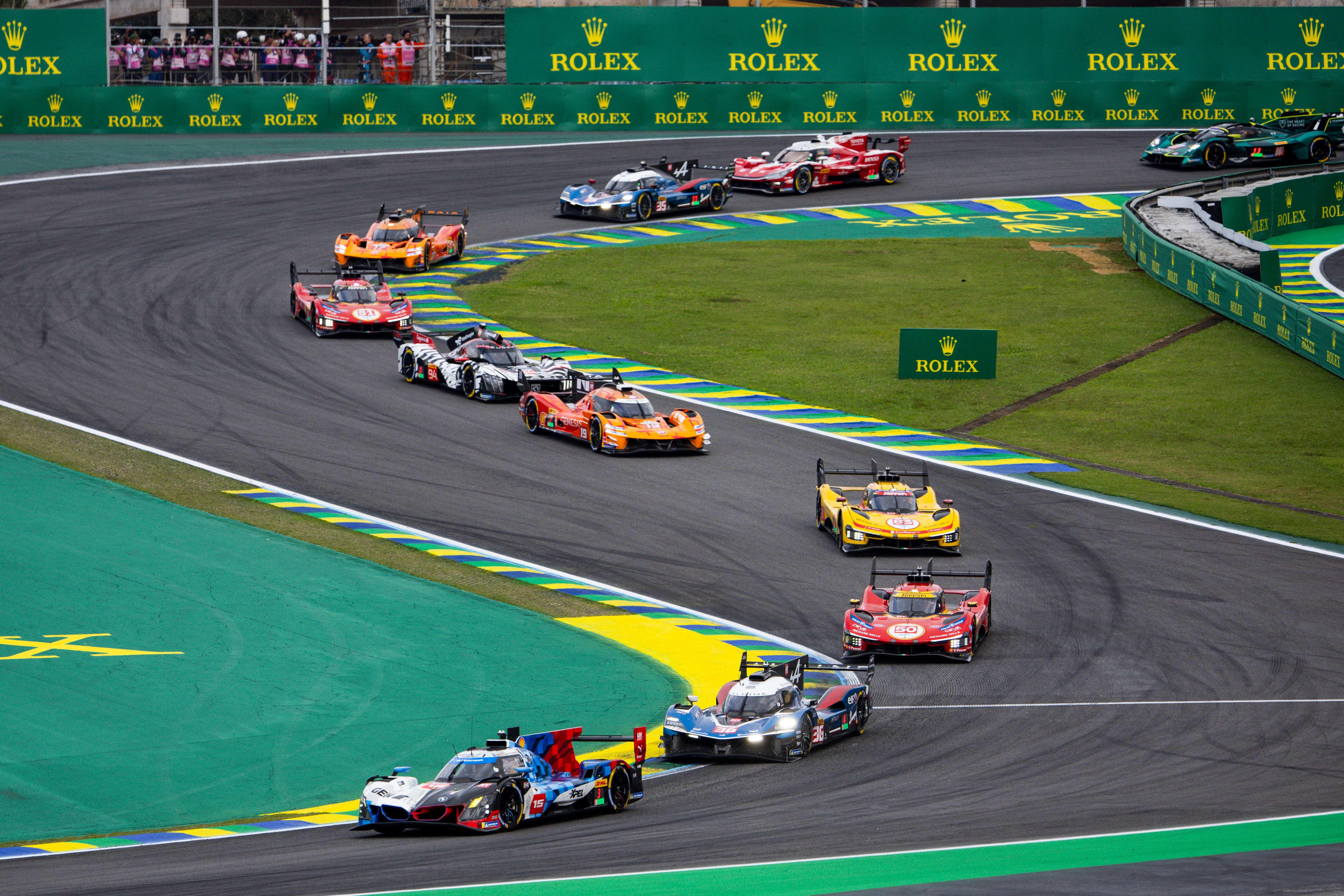
In São Paulo, the dice came out early and often. Alpine rolled first, bringing the No. 35 in after just 40 minutes for an energy-only stop--and a partial top-up. The No. 93 Peugeot and No. 20 BMW made similar moves.
An uncharacteristically poor 17th qualifying result drove BMW Team WRT’s plan for the No. 20. The first-stint strategy included stretching energy two laps longer than most of their competitors in a bid to put the car in clean air. But the move backfired when Rast came out just behind the No. 93 Peugeot.
The No. 15 BMW started fourth and quickly moved to second, dropping back only during pit stop cycles. Drivers Kevin Magnussen, Raffaele Marciello and Dries Vanthoor stayed up front, stringing together four 42-plus lap stints.
Eight seconds quicker
A safety car-free race allowed strategies to play out, and the No. 51 Ferrari emerged as the No. 15’s main challenger. But the BMW’s steady pace allowed it to wait until there were just 48 minutes left before making its final stop. Calado brought the No. 51 in 12 minutes sooner.
Pitting from the lead and needing less energy than Calado, Vanthoor got the No. 15 in and out eight seconds quicker than the No. 51. Vanthoor kept the lead, coming out five seconds ahead of the Ferrari. He crossed the finish line two seconds ahead of Calado.
“The strategy was fantastic and the car was phenomenal,” Vanthoor said.
None of the strategies are new or particularly novel. But they are more prevalent.
The Hypercar field is both deep, at 17 full-time starters, and closely matched. Five of the seven returning manufacturers—Alpine, BMW, Cadillac, Peugeot, and Toyota— completed performance-enhancing evo updates for the 2026 season. Ferrari, the 2025 champions, and Aston Martin brought back last year’s cars, while Genesis joined the grid.
Each has top-10, points-scoring finishes.
The competitiveness makes overtaking a chore, even on spacious circuits. Starting near the back of the class practically requires an alternative strategy to gain track position. The decision becomes not if, but when. The answers appear to favor early-race moves, like the No. 20 BMW at Spa and the Toyotas at Le Mans, that leave time for a Plan B.
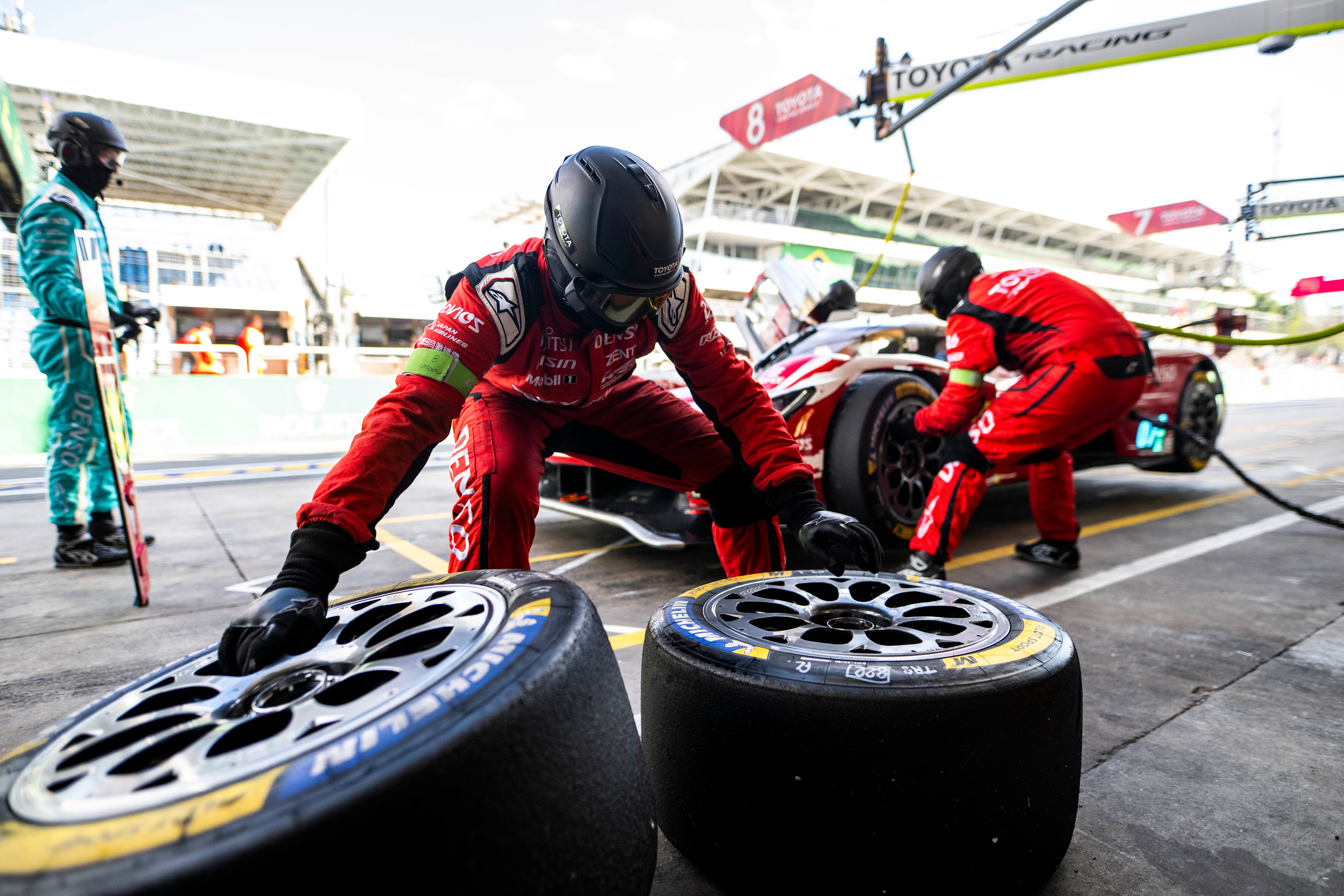
Michelin’s new tires, used by both WEC Hypercar and IMSA GTP teams, are also influencing strategy. The slick compounds are designed to be more consistent throughout stints, and they are delivering.
But drivers and teams are still learning wear characteristics as the tires debut at each WEC circuit. Ferrari calculated that triple stints at Imola were not possible, Sportscar365 reported. Toyota proved otherwise.
Drivers can feel the difference. Surface degradation is improved. Thermal degradation, where exceeding specific temperatures worsens performance, is the new concern.
“Once you go over a certain threshold, you start to lose grip, which I personally find harder than actually feeling a tire lose surface,” Porsche Penske GTP class driver Laurens Vanthoor said during the official 24 Hours of Le Mans broadcast.
Vanthoor said temperature management is now factored into both race pace and track position. Being out front is ideal, but any clean air is better than nose-to-tail racing.
“Whenever you’re drafting behind another car, you’re losing downforce. You’re getting the heat from the car in front. All that [makes it] a lot worse,” Vanthoor said. “That’s why we see these strategies in Spa and now here [at Le Mans] of people wanting to run in clean air, run at their own pace and control the tires.”
Reference
Ferrari on Toyota Imola triple-stint: https://sportscar365.com/lemans/wec/imola-post-race-notebook-5/
From the archives
Holding Its Own

Michelin's new tire performed well in testing and its race-weekend debut, but Sebring means still more challenges.
Aerodynamic Advances

Inside BMW’s process to improve its M Hybrid V8s ahead of the 2026 IMSA and WEC seasons.