

Aerodynamic Advances
Inside BMW’s process to improve its M Hybrid V8s ahead of the 2026 IMSA and WEC seasons.

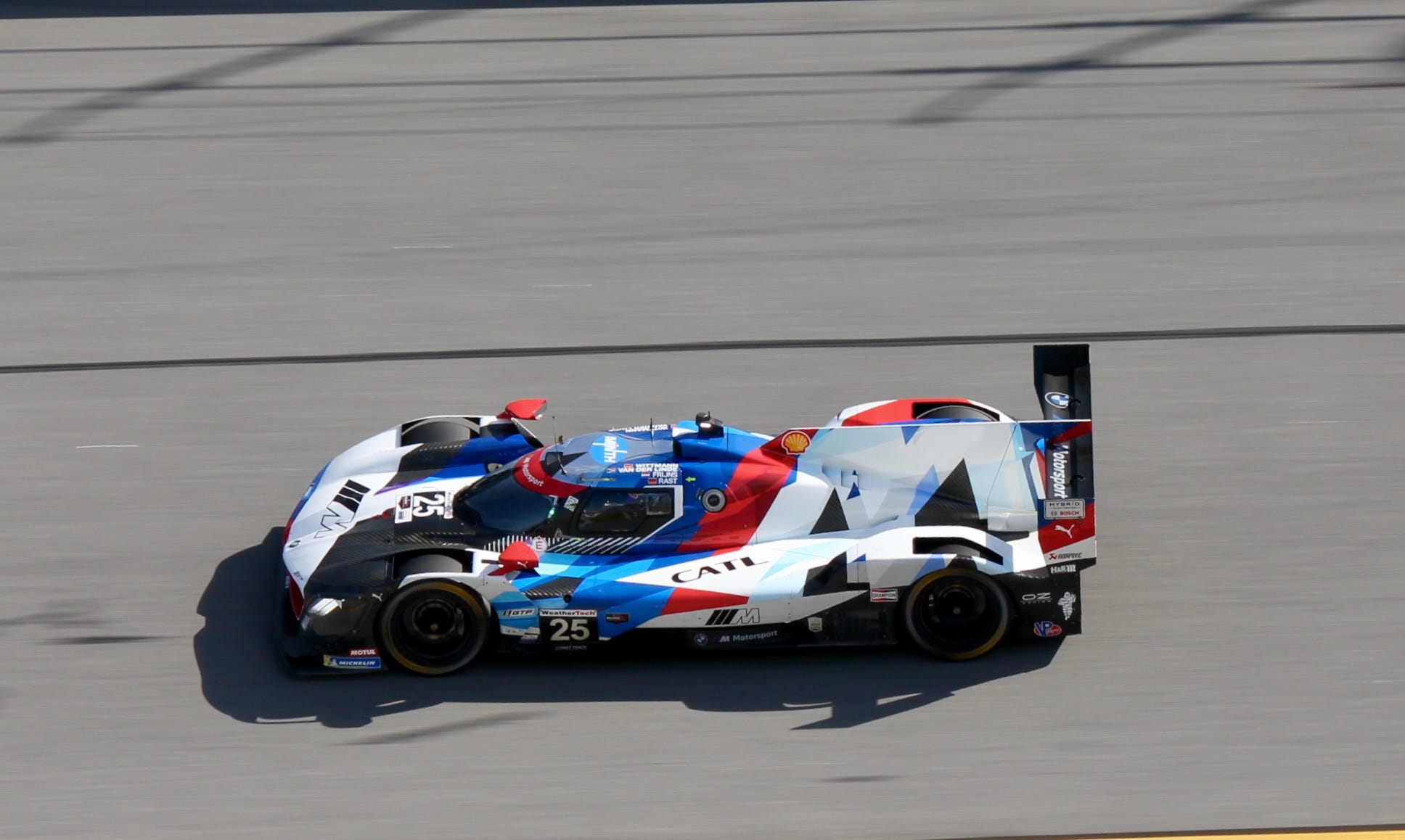
A race car’s setup evolves from practice to practice, race to race, and even season to season. But when BMW’s M Hybrid V8s take the grid for the Rolex 24 in January, they will be backed by an effort that began 18 months ago.
BMW has spent the second of its five EVO jokers on a significant performance update to its prototype. A smaller design of its iconic kidney front grille as well as changes to the front headlights and splitter make it look like a new car.
“But officially, it’s just an aerodynamic update,” BMW M Motorsport Project Lead Achim Klein told reporters in a 2026 look-ahead briefing held over the WEC’s finale weekend in Bahrain. “It’s really bodywork, aerodynamics, things that are where the air is touching the car.”
Mixed results
The M Hybrid V8 LMDh joined IMSA in 2023 and made its WEC debut in 2024. Race results for the two-car teams have been mixed: a respectable three wins and nine podiums in IMSA, but no wins and two podiums in WEC. Notably, the WEC record includes a best finish of just 16th at Le Mans.
The equivalent of two full seasons of racing convinced BMW that the car could benefit from some changes, particularly in WEC competition.
The first EVO joker, brake material changes, was introduced at the beginning of the 2025 season. BMW’s “first ideas” for the aerodynamic overhaul came in July 2024, Klein said.
“The [drivers’] main wish was, of course, the consistency topic,” he explained. “The ability to drive constant lap times throughout the stint without being forced to pay too much attention to an edgy car.
“You need to get it in line,” Klein added. “This is what the driver then describes as balance, and this is a key performance factor.”
Once a major change’s desired outcome is nailed down, the real--and most time-consuming--work begins. Computer modeling trials to test and refine concepts. Wind tunnel work to validate real-world scale and full-size models. Parts production to put the new idea on a chassis. Then, of course, on-track testing.
“It takes quite some time,” Klein said. “You don’t do this in half a year.”
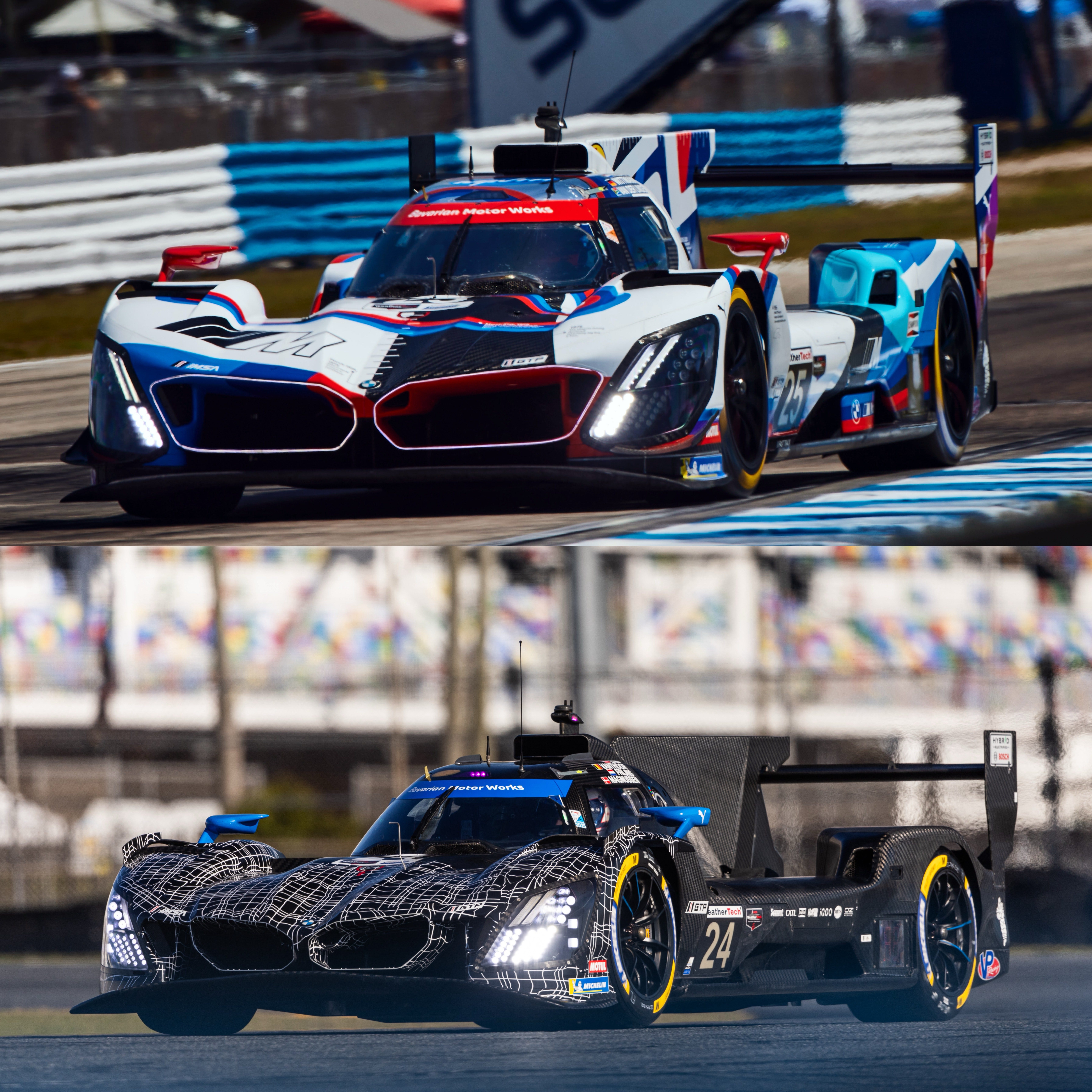
The refined M Hybrid V8 first hit the track at France’s Circuit Paul Ricard in August. More testing was done at Circuit of the Americas in September. IMSA’s official sanctioned testing ahead of the 2026 season, held Nov. 14-16, offered the most extensive trials so far.
Proper racing is still a ways off, but so far, the results are encouraging.
“There is a clear difference in terms of drivability and in terms of consistency,” Philipp Eng, co-driver of BMW’s No. 24 IMSA entry, told Sportscar365 following his Daytona work. “I think that’s exactly what you need in endurance racing.”
Designing and improving high-performance race cars is largely an engineering exercise. But no amount of CFD modeling and onboard data can convey what drivers feel.
“You cannot exclude the human factor out of driving this car,” Klein said. “We have a lot of sensors, and we can evaluate a lot of topics from the pure technical point of view. [Then] you have feedback from the drivers, which no sensor can give you. You need to have somebody describing the direction of the development of the car, especially in terms of driving behavior,” he added.
Always evolving
For drivers, evaluating technical changes to a car brings an added challenge. While a track’s layout or surface may call for specific settings--such as higher ride heights for bumpier surfaces--a car’s basic set-up will also change from race to race.
“The general concept of the car is always [evolving],” BMW Team WRT No. 20 co-driver René Rast told On Motorsport during September’s WEC Lone Start LeMans weekend. “You find something, you put it in the car, and if it’s good, you keep it in the car. You’re upgrading the setup from race to race, and then you make small adjustments at certain tracks.”
A driver’s perspective can vary based on personal preference and team role. Rast was the No. 20’s designated race-starting driver in 2025. His focus was on longer runs, as opposed to Sheldon Van Der Linde, who was responsible for setting it up for qualifying.
“In the practice sessions, I take the used tires from Sheldon and make my race prep,” Rast explained. “If I start with Sheldon’s qualifying setup, it will be too aggressive for the long runs. We obviously have to drive a bit more conservative for the race.”
Much like setup during race weekend, translating driver input to technical changes is a key part of testing. BMW relies on verbal feedback from the drivers to understand what is working and what needs a second look. The driver-engineer connection must be strong to be effective.
“As an engineer, you need to understand what the driver is telling you,” Klein said. “You need to understand his way of describing car balance. If you have this good relationship, and you know what the technical background is of the change, and he’s telling you if this is fitting into his way of driving, then you can develop the car.”
From the archives
Role Reversal

A scheduling conflict meant BMW M Team WRT had to change its driver lineup and re-assign some roles. One of those changes--who qualifies the car--will remain in place.
And Then There Were Four

BMW's Watkins Glen triumph may have come on a technicality, but the maker's two IMSA GTP teams are proving they can race with anyone.
The Doctor Is In

Valentino Rossi's switch to full-time auto racing meant going back to basics and potentially settling in below the sport's pinnacle. He couldn't be more content.
References
Eng on Daytona testing--https://sportscar365.com/lemans/wec/eng-clear-difference-in-updated-bmw-m-hybrid-v8/