

Pony's Progress
The new Mustang GT3 Evo package has moved Ford Racing closer to IMSA title contention.

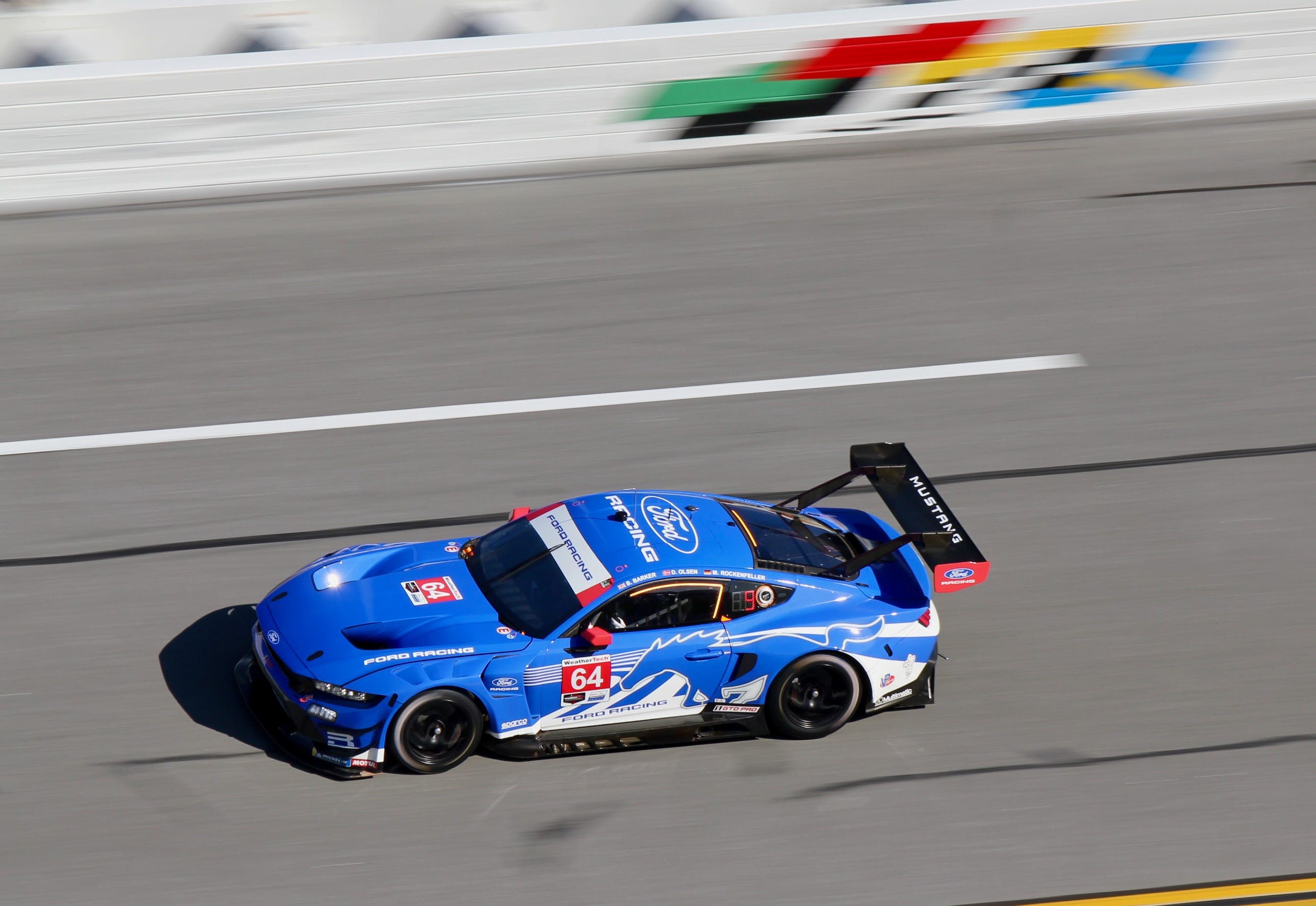
Ford Racing’s start to the 2026 IMSA season was the opposite of 2025.
Last year, the two Ford Multimatic Motorsports Mustang GT3s combined for a class win and four top-six finishes at Daytona and Sebring. This season, the pair’s best finish after two rounds was sixth--and that was with an extensively updated Mustang package.
But the so-so start masked what the team felt was a stronger car than the one that won a series-best three races in 2025, including the season-opening Rolex 24.
The No. 65 Mustang’s triumph at Laguna Seca shows they might be right.
Frédéric Vervish and Christopher Mies inherited the GTD Pro class lead in the closing laps, benefitting from an early race pit stop to change a punctured tire. The move put them on an alternate fuel strategy, setting up a late-race battle with the No. 4 Corvette. The Mustang prevailed.
“I thought, ‘Okay, probably the Corvette will just pass me,’” Vervisch said. “But surprisingly I could keep it in front of him.”
The win put Vervish and Mies fourth overall in the GTD Pro drivers’ standings heading into their home race at Detroit May 30. It also gives them confidence that the Evo package has pushed an already competitive car closer to title contention.
“That’s real proof that the Evo was working,” Vervish said. “That’s a relief. That’s nice to see for Multimatic, for Ford, for all the people working on it. Suddenly now we are back in the championship.”
Wins at Daytona and Indianapolis showed Mustang GT3 is strong at tracks where straight-line speed is paramount. The Evo package focused on adding downforce, a new brake package and more cornering stability. The goal was to give the car more bite through faster turns, and make it more consistent under braking.
Such characteristics are mandatory to compete at Laguna Seca, which packs a mix of fast corners and a famous hairpin in a tight, 2.2-mile layout.
“In the past this has been probably the most challenging track of the calendar for our car,” Mies said. “We came back with the Evo and won.”
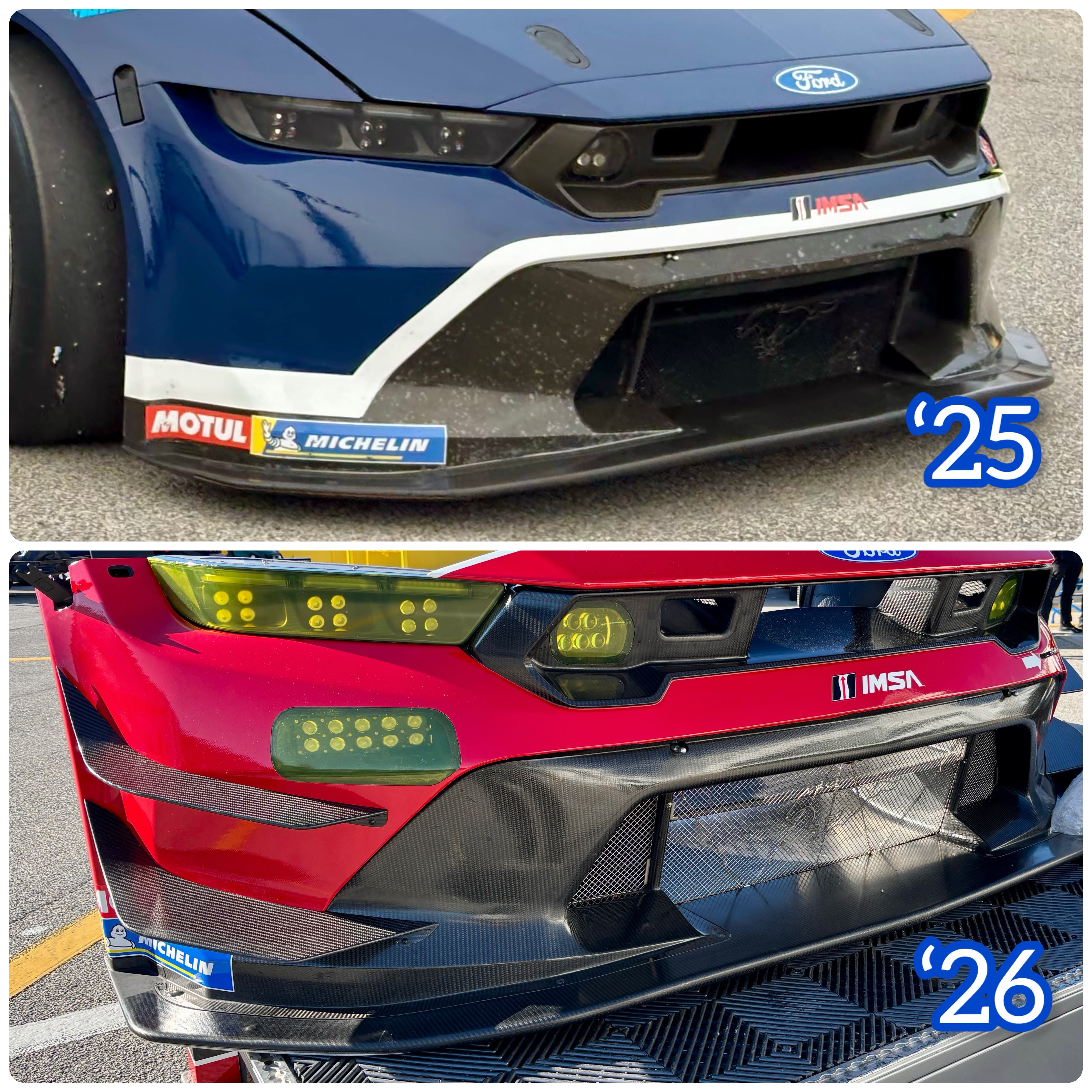
Vervisch said the changes are evident behind the wheel. The added downforce helps with both grip and tire wear, while the revamped brakes allow drivers to get through any type of turn more quickly.
“It’s more predictable,” he said. “When you enter a corner, you know a bit more what to expect, which is important. There are drivers who can cope with inconsistency better than others, but I think that in general, you want a car that, when you break in the corner, you know what to expect.”
Vervisch and Mies joined Dennis Olsen, who drives the No. 64 sister car in IMSA, to debut the Mustang GT3 Evo at the Nürburgring 24 hours. They were competitive for most of the race, overcoming an unplanned stop to change a tire to finish eight in the top-level SP9 pro class.
“We’re still not there,” Vervisch said. “But the results we had in the last race in IMSA and even [at] the Nurburgring really shows that that we can compete all around the world.”
From the archives
A CEO Goes Pro

DAYTONA BEACH, Florida--Jim Farley isn't used to being an also-ran, and he's not accustomed to doing big things with little fanfare.
History at Daytona

The 2025 Rolex 24 schedule included a new event, the Historic Sportscar Racing IMSA Classic, that showcases sports car racing's iconic past.